The date you chose a different path deserves more than a passing glance on a calendar. Learning how to display recovery milestones is about creating a visible reminder of the strength it took to begin, the commitment it takes to continue, and the people who have stood beside you along the way. The right display is not about impressing anyone. It is about making your progress feel present in the everyday moments that matter.
A recovery milestone can be private, shared with a close circle, or proudly celebrated with your home group. There is no single right way to honor it. What matters is choosing something that feels honest to your story and gives you encouragement when you need it most.
Start with the Meaning Behind the Milestone
Before deciding where to place a reminder, think about what you want it to hold. For some people, a clean date is a daily promise. For others, it represents a hard-won anniversary, a new beginning, or the support of a sponsor and group that helped make recovery possible.
Your display can reflect that meaning. A simple item with your name and sobriety date may be exactly right if you want a quiet, personal reminder. If community has been central to your journey, you may want to include a group name, a meaningful phrase, or a gift from someone who has walked the road with you.
This is also a good time to let go of comparison. One person may mark 24 hours with deep gratitude while another is celebrating decades. Both are worth honoring. Recovery is not a contest, and a milestone display should never feel like pressure to perform. It should feel like proof that one day at a time adds up.
How to Display Recovery Milestones at Home
The most meaningful recovery reminders are often the ones you naturally see and use. A display does not need a special shelf or a large announcement to have real impact. It can live in the routines that already support your life.
Make a daily-use item part of the ritual
A personalized 15 oz mug is a natural way to keep a milestone close without making it feel formal. Place it by the coffee maker, on your desk, or in the spot where you begin your morning. Seeing your name, clean date, or group name while you enjoy coffee or tea can turn an ordinary pause into a moment of gratitude.
That daily usefulness matters. A keepsake tucked into a drawer may still be cherished, but an item you reach for every morning becomes part of your recovery rhythm. It is there on peaceful days and on difficult ones, offering a steady reminder: you have already come a long way.
Create a small space with purpose
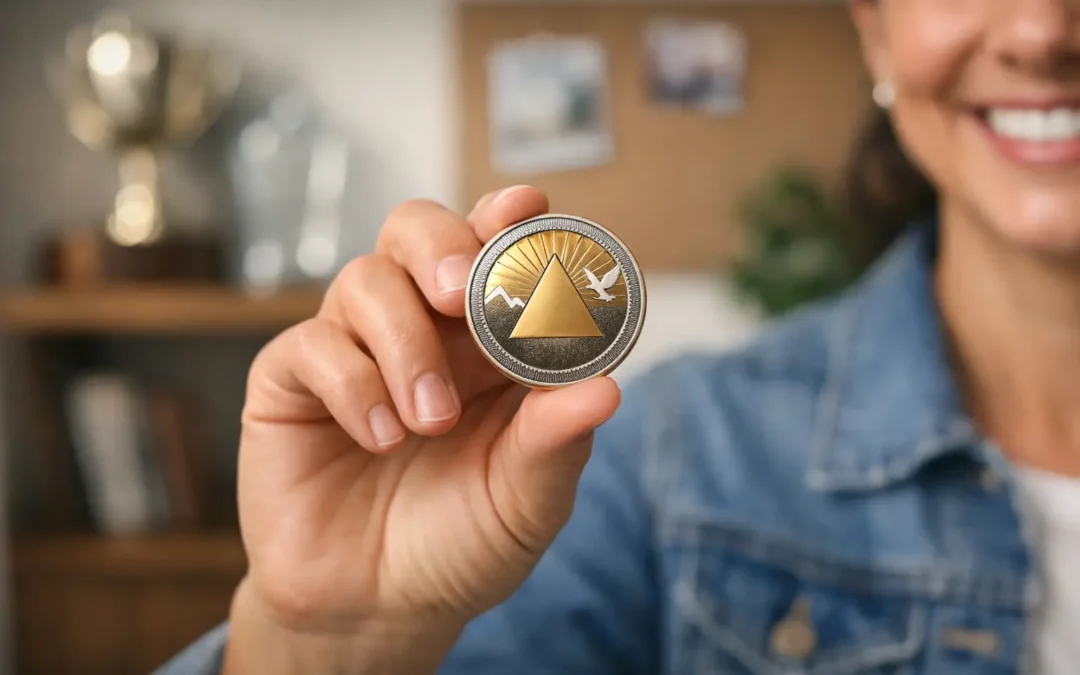
If you prefer a dedicated reminder, choose a spot that feels calm and personal. A bookshelf, bedside table, desk, or kitchen counter can hold a milestone mug alongside a recovery book, a handwritten note, a coin, a photo, or a small plant. Keep the space simple enough that it feels comforting rather than crowded.
Some people enjoy adding a new item as each anniversary arrives. Others keep one meaningful piece in view year after year. Both approaches work. The goal is not to build a perfect display. It is to create a place that brings you back to your values when life gets noisy.
Let your reminder fit your privacy needs
Not everyone wants their recovery visible to every visitor. If you live with people who do not know your story, or you simply value discretion, choose a display that feels personal without needing explanation. A mug at your work-from-home desk, a keepsake in your bedroom, or a small item in a private reading corner can carry the same meaning.
On the other hand, sharing your milestone openly can be powerful when your home is a gathering place for recovery friends or family who support you. A visible reminder may open a kind conversation, encourage someone else, or help loved ones understand how much this date means. The right level of visibility depends on your comfort, not anyone else’s expectations.
Bring Milestones into Your Recovery Community
Recovery is personal, but it is rarely meant to be carried alone. Displaying a milestone in a community setting can be a meaningful way to honor connection, accountability, and gratitude.
A personalized gift for a sponsor can recognize the person who answered calls, offered guidance, and believed in you when you were learning to believe in yourself. Including their name, sobriety date, or a simple message of thanks makes the gift feel specific to the relationship rather than generic.
For a sponsee, a newcomer, or a group member, a milestone item can say, “I see your effort.” It does not need to be expensive or elaborate. The most memorable gifts often reflect a real detail: their first anniversary, their home group, the date they began again, or the phrase they repeat when they need courage.
Group celebrations call for a little extra thoughtfulness. If a member is comfortable being recognized, present the item after a meeting, at a fellowship gathering, or during a small anniversary celebration. Keep the focus on encouragement, not attention. Some people love a room full of applause. Others would rather receive a quiet gift and a sincere hug. Ask when you are unsure.
Choose Details That Make It Personal
Personalization gives a recovery display its heart. A name makes it yours. A sobriety date anchors it in a real moment. A group name can honor the place where you found belonging. Together, those details turn an everyday object into something that carries a story.
When choosing what to include, use language that feels true to the recipient. Some people proudly use “sober,” “clean,” or “recovery.” Others prefer a simple anniversary date or an encouraging phrase. There is no need to force a label. The best wording is the wording they would recognize as their own.
For gifts, accuracy matters. Double-check the spelling of names, dates, and group names before ordering. A personalized piece becomes more meaningful when the details are right, especially for a date someone has worked hard to protect.
At Recovery Gifts, personalized mugs are made for this kind of everyday encouragement. They offer a practical alternative to disposable cups while giving a clean date, name, and recovery connection a place in daily life. That combination of purpose and use is what makes a simple mug feel like a lasting reminder.
Remember That a Milestone Is More Than a Number
Anniversaries matter, but so do the smaller moments that help someone reach them. The first meeting attended. The first call made instead of isolating. The first holiday handled differently. The first honest conversation. These moments may not always have a traditional coin or celebration attached, yet they are part of the same brave work.
You can display those wins through a note tucked into your mug, a phrase written on a small card, or a photo from a day that represents a turning point. If a full anniversary feels far away, let today’s effort be worthy of recognition. A visible reminder can help shift the focus from what still lies ahead to the progress already made.
A milestone display should never replace support, meetings, sponsorship, or the daily practices that keep recovery strong. It can, however, reinforce them. When you see your clean date in the morning, it may remind you to make the call, attend the meeting, take a breath, or keep going.
Give the Reminder a Place in Your Next Chapter
Your recovery story keeps moving. The item that marks your first year may carry new meaning at year five, ten, or twenty. Let it grow with you. Use it, keep it close, and allow it to remind you that progress is built through ordinary days handled with courage.
Choose a display that makes you feel supported, not exposed; proud, not pressured; connected, not alone. Every time you see it, let it quietly say what recovery has already shown you: your life is worth showing up for today.